




From risk assessments and crowd control to emergency planning and insurance, here’s what event organisers need to consider before hosting a Bonfire Night display.
Bonfire Night is a major date in the events calendar, with communities, venues and businesses across the UK hosting firework displays and bonfire celebrations during November.
Organising a safe and successful display involves much more than arranging fireworks and opening the gates. Poor planning can put spectators, staff and contractors at risk, while potentially leaving organisers facing legal action, compensation claims and costly insurance complications.
With 5th November approaching, Monster-Mesh have teamed up with Bob Fulton, Business Development Manager at C2 Safety, to highlight important safety considerations for anyone organising a Bonfire Night event.
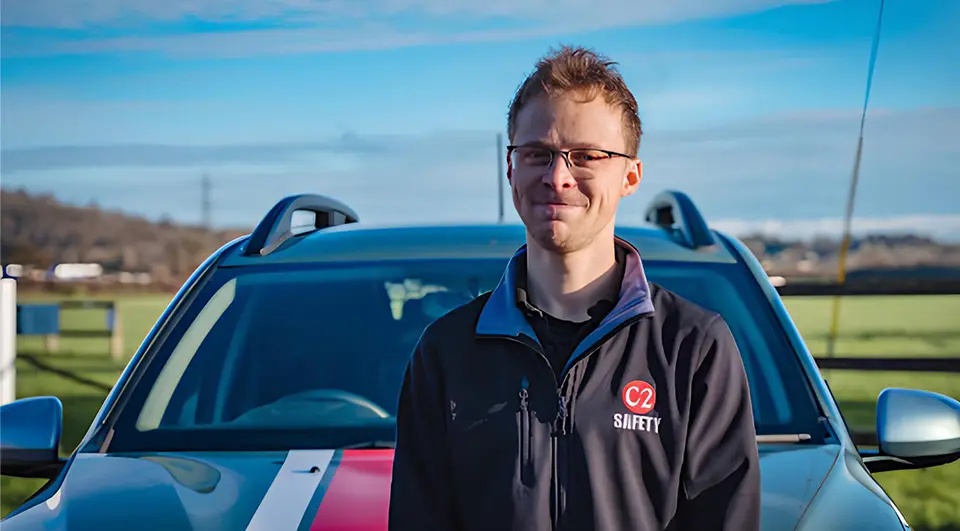
We teamed up with C2 Safety to share expert advice for anyone running a Bonfire Night display.
Jump to:
- Complete a suitable risk assessment
- Plan crowd control and spectator areas
- Prepare an emergency plan
- Check your insurance and legal responsibilities
- Keep fire and fireworks hazards under control
- Have a contingency plan for bad weather
- Consider the impact on neighbours, pets and wildlife
- Make safety part of your event planning from the start
1. Complete a suitable risk assessment
A risk assessment should be one of the first steps when planning an organised fireworks display or bonfire event. Organisers need to identify potential hazards, consider who could be harmed and put appropriate measures in place to reduce the risks. Among other considerations, this includes thinking about fire and burns, fireworks misfiring, crowd congestion, adverse weather conditions and access for emergency services.
For organised events, the risk assessment should be suitable for the scale and nature of the activity, with significant findings recorded and addressed where legally required. It should be completed by someone with the appropriate knowledge and experience, and reviewed if circumstances change.
Bob Fulton, Business Development Manager at C2 Safety said,
“It’s easy to get caught up in the practical arrangements for an event, but it’s important to take a step back and think about everything that could go wrong too. A risk assessment helps you identify potential problems before they happen and put measures in place to reduce the likelihood of an incident.”
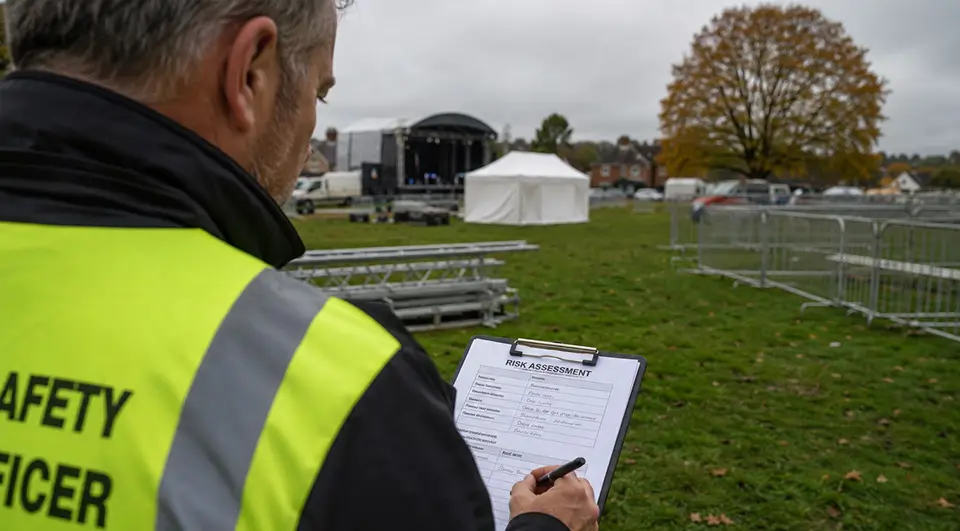
A risk assessment should start before the first barrier goes up, not the night before the event.
2. Plan crowd control and spectator areas
Crowd management is a key consideration for any event where members of the public gather, particularly when fireworks and open flames are involved.
Organisers should plan where spectators will stand, how people will enter and leave the site, and how they will move around the event safely. The layout should also account for the fireworks’ safety distances, emergency access routes and the potential for large numbers of people to gather in one area.
Suitable fencing and crowd barriers can help establish designated areas, guide pedestrian movement and prevent people from entering restricted zones. Our Monster-Mesh event branding for fencing and crowd barriers, allow event organisers to incorporate branding into their site infrastructure, whilst supporting event safety. These barriers must be selected, positioned and managed appropriately for the specific event and should form part of a wider crowd safety plan.
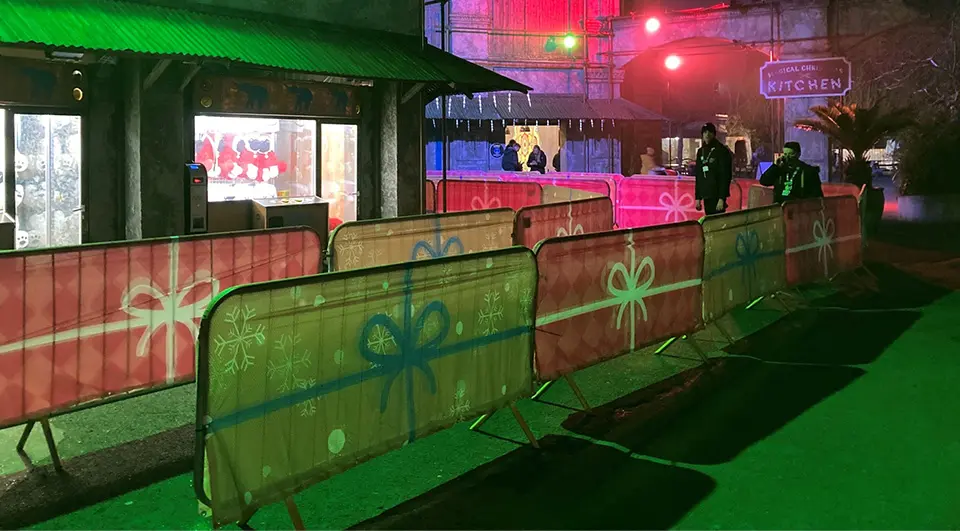
Printed barrier covers keep queues organised and help your event stand out.
3. Prepare an emergency plan
Don’t wait until the night itself to decide how an emergency will be handled. Everyone involved should know the procedures in advance.
Even with thorough preparation, organisers need to be ready to respond if something goes wrong. An emergency plan should set out what happens if a fire spreads, a firework malfunctions, someone is injured or adverse weather makes the event unsafe to continue. It should also establish who is responsible for making decisions and a communication hierarchy.
Firefighting equipment that is appropriate to the risks should be available, and those responsible for using it need to fully understand their roles. Organisers should also ensure that staff, contractors and volunteers receive clear instructions before the event begins.
4. Check your insurance and legal responsibilities
Organisers should check their insurance arrangements well before the event, rather than assuming an existing policy will automatically cover everything involved. Review the activities covered, any exclusions or conditions, and whether the policy is appropriate for the event’s scale and circumstances.
Depending on the arrangements, it may also be necessary to check the insurance held by contractors and other suppliers.
There are wider legal responsibilities to consider, too. Employers and those responsible for workplaces or event sites must comply with applicable health and safety legislation, while organisers may have additional duties depending on their role and the nature of the event.
Serious health and safety breaches can lead to enforcement action and prosecution, with substantial or unlimited fines available for certain offences. Depending on the circumstances, organisers could also face civil claims, reputational damage and disputes over insurance cover.
Taking advice early can help identify responsibilities and reduce the risk of expensive problems later.
5. Keep fire and fireworks hazards under control
Fireworks and bonfires introduce hazards that require careful planning and appropriate precautions.
Fireworks should be stored, handled and used in accordance with the relevant legal requirements and manufacturers’ instructions. Storing any more fireworks than a small quantity requires a license and falls under the Explosives Regulations 2014. This amount is 5kg.
Organisers must ensure that spectators remain outside the designated safety distances and that fireworks are kept away from bonfires and other potential ignition sources.
Bonfires should be positioned away from fences, sheds, buildings and other combustible materials. Petrol and other accelerants should never be added to a fire, and unsuitable items such as aerosols and foam furniture should not be burned.
It’s also important to have appropriate firefighting equipment available and arrangements in place for dealing with an incident.
For larger displays, organisers should ensure that competent people are responsible for the fireworks and that the arrangements reflect the particular risks of the site and event.
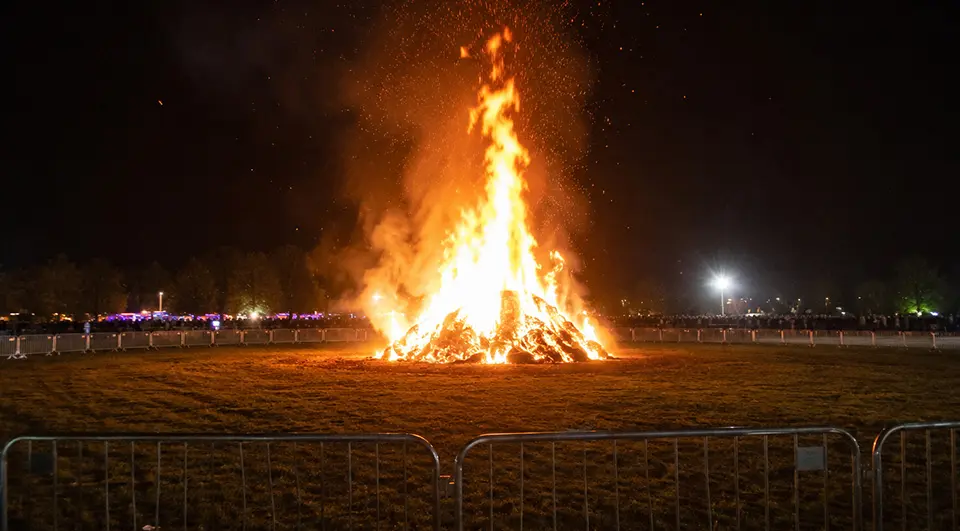
Clear barriers and safe distances let everyone enjoy the bonfire without getting too close.
6. Have a contingency plan for bad weather
Weather can have a significant impact on outdoor events, especially when fireworks, smoke, temporary structures and large crowds are involved.
Wind direction and strength can affect where smoke travels and whether fireworks can be used safely. Heavy rain and poor ground conditions can also affect pedestrian routes, emergency access and the stability of temporary infrastructure.
Organisers should establish in advance how weather conditions will be monitored, who will decide whether an event can proceed and what circumstances would require activities to be delayed, changed or cancelled.
Communicate any changes clearly to staff, contractors and attendees. A contingency plan is only useful if people know what to do when it needs to be put into action.
7. Consider the impact on neighbours, pets and wildlife
Event safety doesn’t stop at the boundary of the site, and organisers should consider the surrounding area when choosing the site and planning the event.
The Fireworks Regulations 2004 prohibit the use of fireworks between the hours of 11pm and 7am, except for 5th November where the allowable time is extended to midnight, and New Year’s Eve, Chinese New Year and Diwali which allow use until 1am.
Fireworks can cause distress to pets, livestock and wildlife, while noise, traffic and smoke can affect people living nearby. If smoke is allowed to spread over a road and obscure vision of drivers, it’s an offence under the 1980 Highways Act.
Giving local residents advance notice can help them prepare for the event, while appropriate signage and clear communication can help visitors understand the arrangements.
Bonfire organisers should also check for wildlife, particularly hedgehogs, that may have sheltered in a bonfire pile. Ideally, build bonfires shortly before they are due to be lit and check the pile carefully immediately beforehand.
Make safety part of your event planning from the start
Careful preparation, appropriate infrastructure and clear responsibilities can help protect spectators, staff and contractors while making the experience more enjoyable and much safer for everyone attending. Expert, Bob Fulton at C2 Safety said,
“Planning is essential. Make sure you’ve thought about the risks, checked your insurance, prepared for emergencies and briefed everyone involved on their responsibilities. Don’t leave important decisions until the last minute.”
For event organisers, the best approach is to treat safety as an essential part of the planning process from day one. It should be something to just check off before the gates open.
Planning a Bonfire Night event? Explore our range of printed fence covers, crowd barrier covers and site safety covers to see how it can support your site setup.
For specific advice on your event’s legal and safety requirements, consult the relevant official guidance and a suitably qualified health and safety professional.