



Choosing the right banner material doesn’t need to be complicated. The best option depends on the size of your banner, where it will be used, and what you need it to do.
This guide explains the differences between common banner materials so you can choose the best option for your project before ordering.
Jump to:
- 5 things to consider
- Quick material guide
- 1. Banner size
- 2. Indoor or outdoor use
- 3. What’s the banner for?
- 4. How long will it be used for?
- 5. When will it be installed?
- Banner material comparison table
Start with these five questions
Before choosing a material, think about:
- How big will the banner be?
- Will it be used indoors, outdoors, or both?
- What’s the main goal? (Advertising, privacy, screening, wayfinding)
- How long will it be installed for?
- What conditions will it face? (Mild summer weather, winter, exposed sites)
Most projects involve a mix of these, and that’s exactly why material choice matters.
Quick material guide (at a glance)
A quick starting point if you just need a general direction:
- Very large banners – Heavy polyester mesh or knitted polyester
- Outdoor use – Mesh materials
- Indoor use – Solid PVC or knitted polyester
- High visual impact – Solid PVC or display polyester
- Short-term promotions in mild conditions – Solid PVC
No banner material is windproof. Mesh banners allow airflow, which helps reduce wind load in exposed locations.

Read on to discover the right material for your brand and project
1. Banner size
Banner size has a big impact on what material will work best.
Small to medium banners
Good options include:
- Solid PVC
- Knitted polyester
- Display polyester
These are easy to handle, install, and keep looking neat at smaller sizes.
Large Banners
As banners get bigger, weight and handling really matter.
We usually recommend:
- Heavy polyester mesh
- Knitted polyester
These materials are:
- Much lighter than solid PVC
- Easier to lift and secure
- Less strain on fixings and structures
A very large banner in solid PVC can be difficult to install and keep secure.
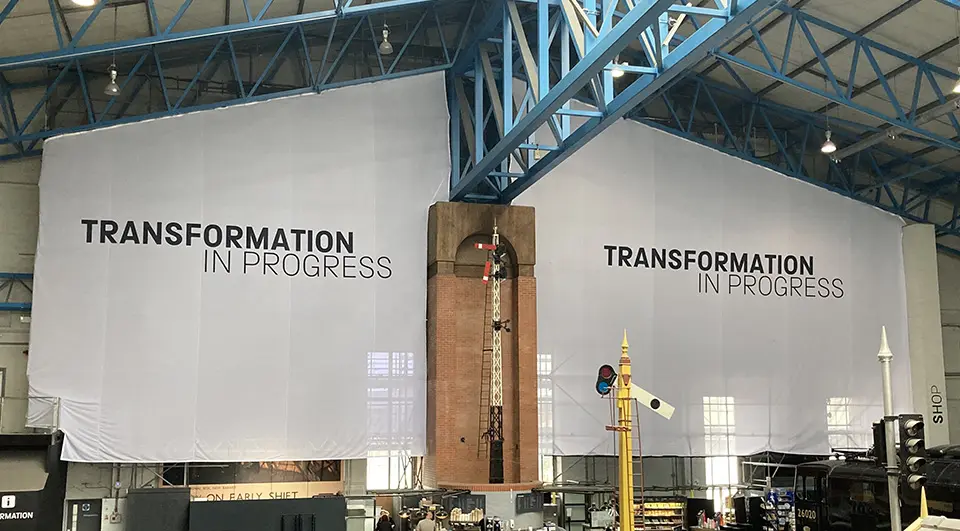
Lighter materials are easier to install and reduce excess weight to structures they’re installed on
2. Indoor or outdoor use
The best banner material depends on whether it will be used indoors or outdoors. It also depends on the outdoor conditions your banner will be exposed to.
Indoor use
Recommended materials:
- Solid PVC – bold colour and sharp print
- Knitted polyester – fabric banners are lighter and easier to handle at scale
- Display polyester – higher visual impact for premium indoor graphics
These are ideal for events, retail, exhibitions, sports halls and venues.
Outdoor use
For outdoor banners, air permeability is key. No banner material is windproof, but some allow more air to pass through:
- Polyester airmesh – 54% airflow (most air permeable)
- Heavy polyester mesh – 52% airflow, thicker and stronger, more impactful print
- PVC mesh – 37% airflow, most cost-effective
Heavy polyester mesh is the strongest and most durable mesh option and gives the most impactful print of the mesh materials thanks to its tighter weave.
Solid PVC can be used outdoors for short periods in mild conditions, but it offers no airflow. In windy locations it can act like a sail, increasing strain on fixings and the risk of tearing.
3. What’s the banner for?
Advertising & brand impact
- Solid PVC – indoor or short-term outdoor in mild conditions
- Display polyester – indoor use
- Heavy polyester mesh – outdoor use
Privacy or screening
- Knitted or display polyester – indoor use
- Heavy polyester mesh – outdoor (tightest weave)
Covering large areas
- Heavy polyester mesh – outdoor
- Knitted polyester – indoor

Mesh banners are an ideal choice for privacy, air permeability and advertising impact
4. How long will it be used for?
While all our materials are temporary branding solutions, some cope better over time.
Short-term use
- Solid PVC
- Polyester airmesh
- PVC Mesh
Longer temporary use
- Heavy polyester mesh
- Knitted polyester
5. When will it be installed?
Conditions matter, especially for banners used outdoors or in open spaces.
Summer or mild conditions
You can prioritise visual impact:
- Solid PVC for short-term use
- Heavy polyester mesh for outdoor sites
- PVC mesh for budget-friendly installs
Windier or more exposed sites
- Mesh banner materials are strongly recommended
- Higher air permeability helps reduce wind load
- Solid PVC should be avoided for large or long-term outdoor use

Consider how long your banner is likely to be installed before choosing your material
Banner material comparison
| Material Category | Material | Air permeability | Strength & durability | Print impact | Best for |
|---|---|---|---|---|---|
| Mesh | 115gsm Polyester Airmesh | 54% | Medium | Medium | Short-term outdoor fencing |
| Mesh | 230gsm Heavy Polyester Mesh | 52% | High | High | Long-term outdoor / mixed use |
| Mesh / PVC | 300gsm PVC Mesh | 37% | Medium | Medium-High | Indoor or mild outdoor |
| PVC | 440gsm PVC | 0% | Medium | High | Indoor or short-term outdoor promotions |
| PVC | 510gsm Semi-Coated PVC | 0% | High | Very high | High-impact for indoor or short-term outdoor use |
| Fabric | 110gsm Knitted Polyester | 0% | Medium | High | Large indoor banners |
| Fabric | 210gsm Display Polyester | 0% | High | Very high | Premium indoor displays |
Still not sure?
If you’re still unsure which banner material is best for you, you can:
We’ll help you choose a material that works best for your project and brand.