




The short answer is yes, you can use Heras fence covers on windy sites. Airmesh is the most air permeable and lets 54% of wind pass through. Elite is 52% air permeable but is a thicker, stronger material. Whatever material you choose, ensure every eyelet is fitted whilst leaving a little bit of give in the material. For strong winds or storms, the best option is to temporarily take your covers down.

Below is everything you need to know about using Heras fence covers on windy sites.
Jump to:
- Why wind matters
- Which material is best
- How to fit covers for windy sites
- Check your fencing
- What to do in a storm
- FAQs
Why wind matters
A bare Heras fence panel lets wind blow straight through it. Add a cover and the wind now has something to push against.
This doesn’t mean you should avoid using Heras fence covers. However, it does mean you should pick the right material and ensure you fit them well.
Which material is best for wind?
The key number is air permeability. This is how much wind can pass through the cover instead of pushing against your fence.
Higher air permeability means less strain on your fence panels.
- 115gsm Airmesh – 54% air permeable
- 230gsm Polyester Mesh (Elite) – 52% air permeable and a thicker, stronger material
- 300gsm PVC Mesh – 37% air permeable and more suited to indoor or short term projects
Still not sure? Order a free material sample pack to compare the weaves for yourself or give us a call and we can help you choose the right material for your project or budget.
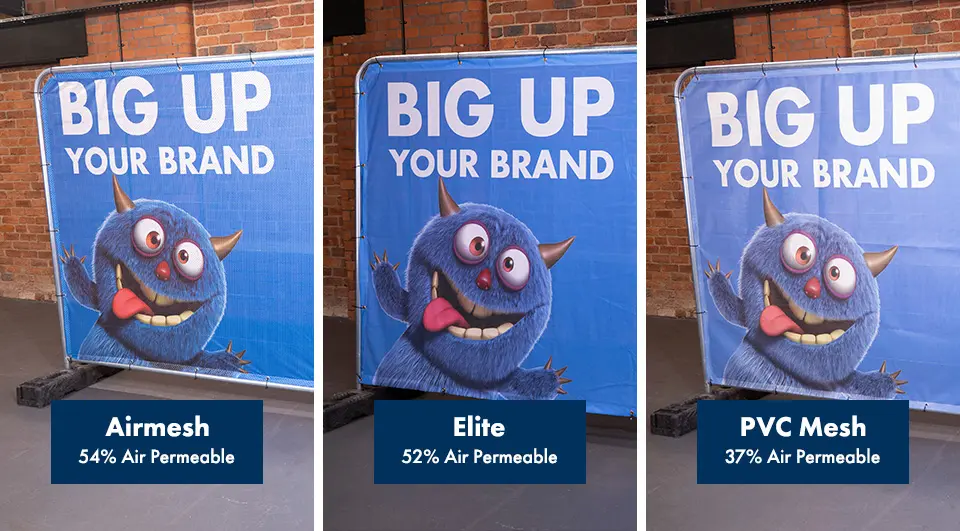
Our three materials side by side. Same print, different air permeability.
Why we don’t sell solid PVC fence covers
Solid PVC lets no air through at all. Your fence becomes a wind sail and takes the full force of every gust. This poses a real risk of your fence line blowing over, causing damage or even injuring a passerby.
If you want more privacy or the boldest print, go for Elite Heras fence covers. These have the tightest weave for an impactful print without being like a kite.
How to fit covers for windy sites
The best material still fails if it’s fitted badly. Two rules:
1. Use every eyelet
Failing to attach every eyelet to your fence cover increases the pressure on the rest. That makes ripping more likely, and they look nowhere near as good.
2. Leave a bit of give
Secure your cable ties but don’t make your material drum-tight. A cover needs a little room to flex with the wind.
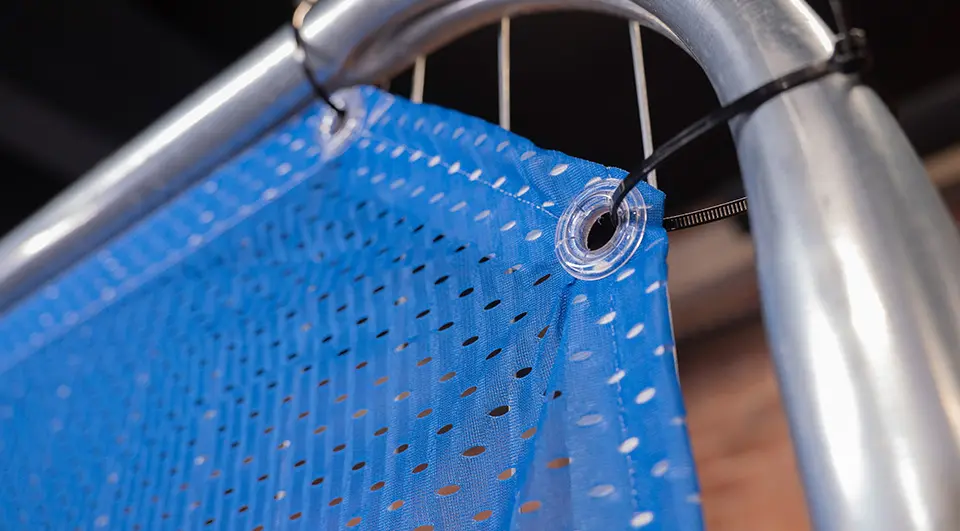
Every eyelet, cable tied, with a little give. That’s the way to do it.
Watch our fitting video below to see it done right.
Check your fencing first
Covers add wind load. So your fencing needs to be solid before anything goes on it. Check with your fencing supplier to ensure your panels are set up right for your site.
What to do in a storm
If a storm or really strong winds are forecast, the best option is to temporarily take your covers down.
Re-hanging a cover is a quick job. Standing a fence line back up is not. Neither is explaining it to the boss.
Treat it like taking the washing in. Storm coming? Down they come. Storm passed? Back up they go. Do that and a good cover lasts years.
A short checklist
- Check you have the right fencing equipment & setup
- Choose Airmesh or Elite fence covers
- Fit every eyelet and ensure your material has a slight give, never drum-tight
- Temporarily take covers down if there’s a storm coming
FAQs
Can Heras fence covers handle strong winds?
Airmesh and Elite let most of the wind pass through, so your fence takes far less strain. But no cover is stormproof. In severe weather, take your covers down until it passes.
What is air permeability?
How much wind passes through the cover instead of pushing on your fence. Airmesh is 54%, Elite is 52%, PVC Mesh is 37%. Higher is better for windy sites.
Are solid PVC fence covers OK outdoors?
No. They block all airflow, so the fence takes the full force of the wind. That can bring the whole line down. Indoors, they’re fine.
Should covers be fitted tight or loose?
Secure, with a slight bit of give. Use every eyelet, but never pull the cover drum-tight. It needs room to flex.